The Role of Cloud Accounting in Enhancing SMB Financial Management
Introduction
Small and medium-sized businesses face unique financial management challenges in today’s competitive marketplace. Traditional accounting methods, relying on spreadsheets and manual data entry, often consume valuable time and resources that could be better invested in business growth. Cloud accounting has emerged as a transformative solution, enabling SMBs to streamline their financial operations, improve accuracy, and gain real-time visibility into their business performance. This article explores how cloud-based accounting systems are revolutionizing financial management for small and medium enterprises, examining the key benefits, implementation strategies, and real-world applications that make this technology essential for modern business success. By understanding the role of cloud accounting, SMB owners and financial managers can make informed decisions about adopting these tools to enhance their operational efficiency and financial health.
Understanding cloud accounting and its fundamentals
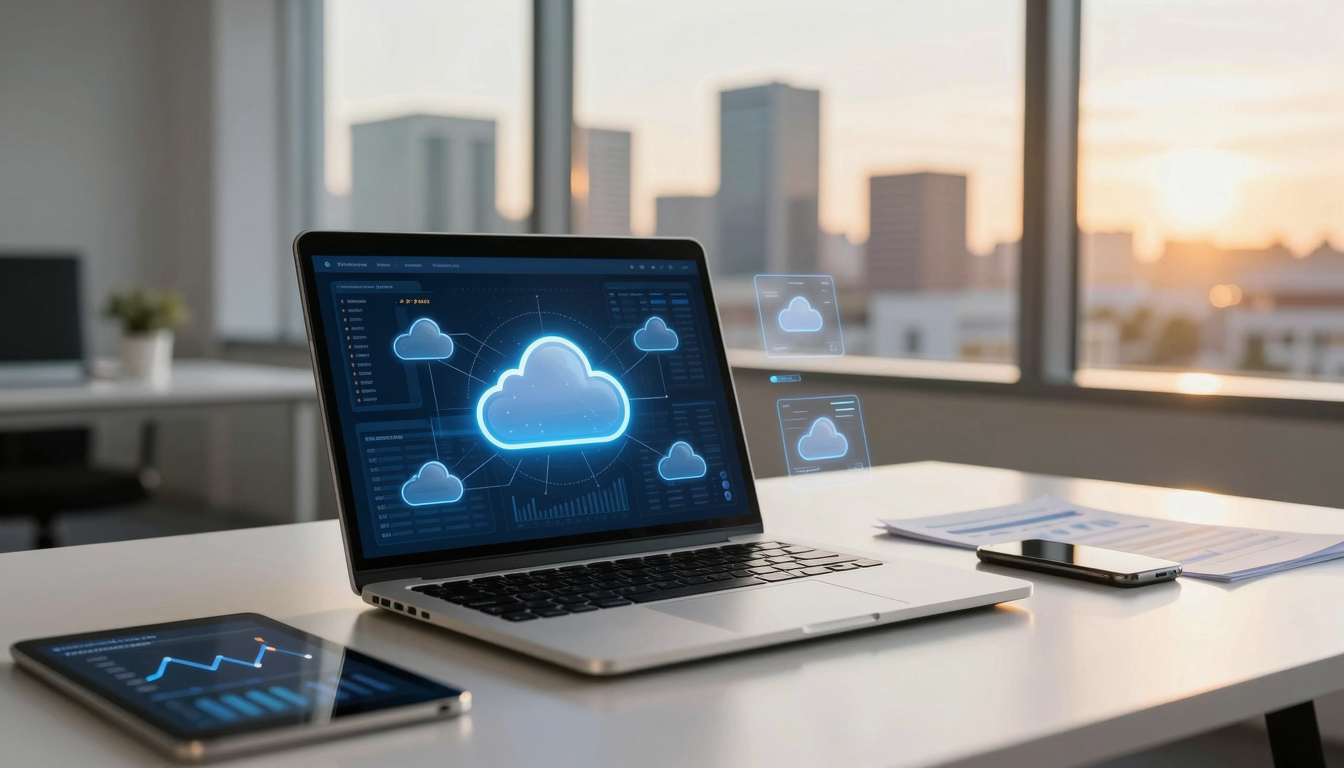
Cloud accounting represents a fundamental shift from traditional desktop-based accounting software to internet-based platforms that store financial data on remote servers. Unlike conventional methods where data exists only on individual computers or local networks, cloud accounting allows authorized users to access financial information from anywhere with an internet connection. This accessibility is particularly valuable for SMBs with distributed teams or multiple office locations.
The core distinction between cloud accounting and traditional systems lies in infrastructure and maintenance. Traditional software requires businesses to invest in expensive servers, maintain complex IT systems, and handle regular software updates themselves. Cloud accounting eliminates these burdens by placing responsibility on the service provider. The provider manages security, updates, data backups, and system maintenance, allowing SMBs to focus on their core business operations rather than technological administration.
Key characteristics of cloud accounting systems include:
- Real-time data synchronization across all devices and users
- Automatic backup and disaster recovery capabilities
- Integration with banking institutions for automated transaction imports
- Multi-user access with customizable permission levels
- Scalability that grows with business needs
- Reduced infrastructure costs and IT overhead
Cloud accounting platforms serve as the central hub for all financial transactions, replacing the fragmented systems many SMBs currently use. By consolidating invoicing, expense tracking, payroll, and financial reporting into a single integrated system, businesses can eliminate data silos and inconsistencies that plague traditional accounting methods.
Streamlining daily financial operations and reducing manual work
One of the most immediate benefits SMBs experience after implementing cloud accounting is the dramatic reduction in manual, time-consuming tasks. Small business owners often wear multiple hats, managing finances alongside their primary business responsibilities. Cloud accounting automates routine processes that previously consumed hours each week, freeing up time for strategic decision-making and business development.
Invoice creation and management exemplifies how cloud accounting simplifies daily operations. Instead of manually creating invoices in word processors or spreadsheets, SMBs can generate professional invoices in seconds using customizable templates. The system automatically tracks invoice status, sends payment reminders, and records payments when received. This automation reduces the days sales outstanding (DSO) metric, improving cash flow for businesses that rely on timely customer payments.
Expense tracking undergoes similar transformation through cloud accounting automation. Employees can photograph receipts using mobile apps, and optical character recognition technology automatically extracts relevant data. Rather than collecting physical receipts and manually entering expenses, the system categorizes transactions automatically, matches them to employees, and routes them for approval. This process, which once required days of administrative work, now takes minutes.
Bank reconciliation, traditionally a tedious monthly task, becomes nearly automatic in cloud accounting systems. The software connects directly to business bank accounts and imports transactions in real-time. Users can quickly match imported transactions to recorded entries, identify discrepancies, and complete reconciliation in a fraction of the traditional time. Consider these operational improvements:
| Financial Task | Traditional Method Time | Cloud Accounting Time | Time Saved |
|---|---|---|---|
| Invoice creation and delivery | 15-20 minutes per invoice | 2-3 minutes per invoice | 85-90% |
| Expense categorization | 30-40 minutes daily | 5-10 minutes daily | 75-85% |
| Monthly bank reconciliation | 4-6 hours | 30-60 minutes | 80-90% |
| Financial report generation | 2-4 hours | 5-15 minutes | 90-95% |
These time savings accumulate dramatically over months and years. A small accounting team that spends 20 hours weekly on manual data entry can reclaim that time for analysis, planning, and advisory work that adds genuine business value. For SMBs without dedicated accounting staff, these efficiencies mean the owner or manager can maintain accurate financial records while focusing on business growth initiatives.
Enhancing financial visibility and data-driven decision making
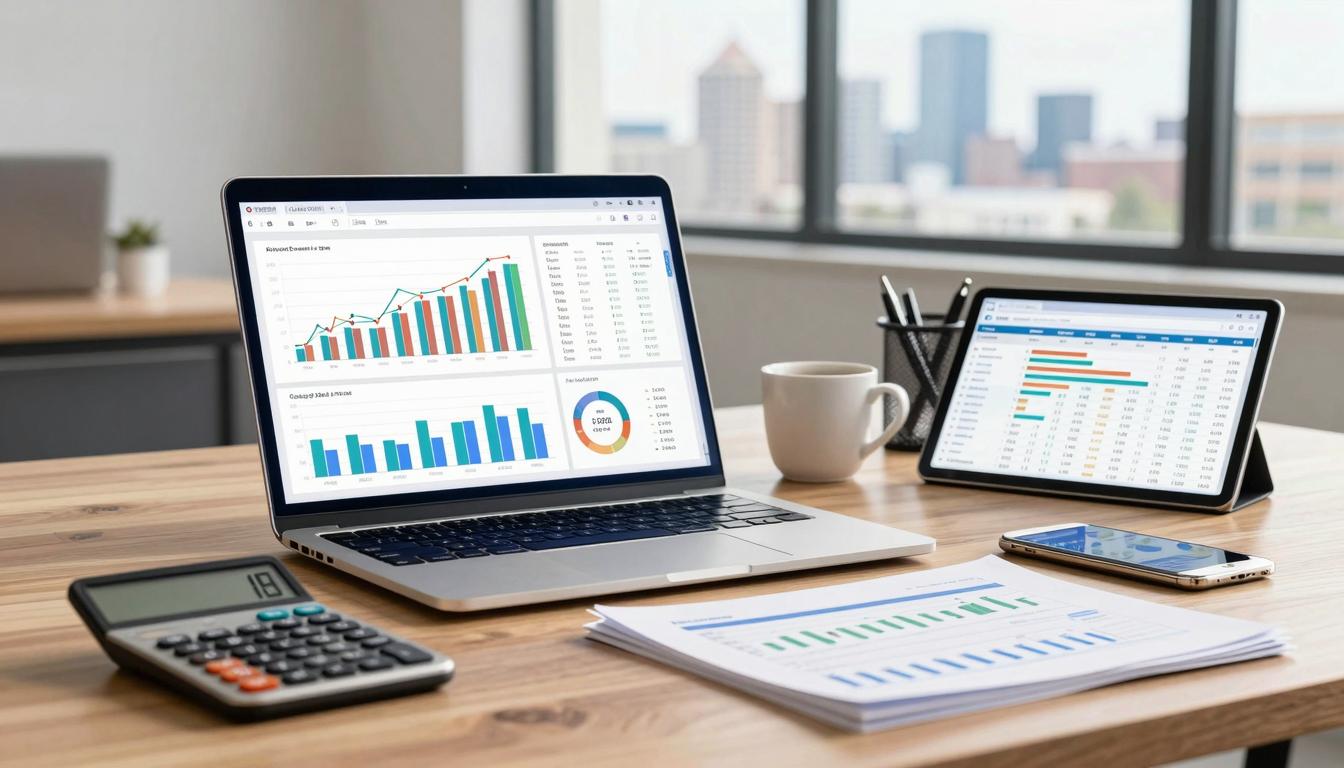
Cloud accounting transforms how SMB owners understand their financial position. Traditional accounting methods typically produce financial reports monthly or quarterly, providing historical snapshots rather than real-time insights. Cloud accounting systems offer continuous financial visibility, allowing business leaders to access current profit and loss statements, cash flow projections, and balance sheets instantly.
This real-time visibility proves invaluable for strategic decision-making. When evaluating whether to launch a new product line, hire additional staff, or expand into new markets, SMB leaders need accurate current financial information. Cloud accounting delivers this data immediately rather than waiting for month-end closing procedures. Managers can quickly assess cash positions, understand expense trends, and identify profitability by product line or customer segment.
Advanced reporting capabilities in cloud accounting platforms exceed what most traditional systems offer. Rather than generic pre-built reports, managers can create customized dashboards displaying key performance indicators relevant to their specific business. A retail business might track inventory turnover, gross margin by product category, and customer acquisition cost. A service business might focus on utilization rates, billable hours, and project profitability. These customizable insights enable managers to monitor business health using metrics that matter for their specific industry and business model.
Cloud accounting also facilitates better cash flow management, which ranks among the top challenges SMBs face. The software can project future cash positions based on historical patterns, upcoming invoices, and scheduled expenses. Rather than discovering cash shortages after they occur, managers can anticipate them weeks in advance and take corrective action such as accelerating collections or adjusting payment schedules with vendors. This proactive approach prevents the financial crises that force many SMBs to seek expensive short-term financing.
Financial forecasting becomes more sophisticated and accurate with cloud accounting data. When managers can analyze detailed historical transaction patterns across multiple years, they can create more reliable projections for future performance. This capability supports better budgeting, more confident loan applications to financial institutions, and stronger business planning. Investors and lenders increasingly expect SMBs to demonstrate this financial sophistication through historical data and forward-looking analysis.
Scalability and integration with business growth
As SMBs grow, their accounting needs become more complex. Additional employees require payroll processing, expanded product lines demand inventory tracking, and growth into new markets necessitates multi-currency and multi-entity capabilities. Cloud accounting systems scale effortlessly alongside business growth, eliminating the expensive and disruptive process of replacing accounting software as the business evolves.
One critical advantage cloud accounting provides is seamless integration with other business applications. Rather than maintaining disconnected systems, SMBs can connect their accounting platform with customer relationship management software, project management tools, e-commerce platforms, and payment processors. When a customer places an order through an online store, that transaction automatically flows into the accounting system, eliminating manual data entry and reducing errors.
For businesses offering subscription-based services, cloud accounting integrations with billing platforms automate recurring invoicing and payment collection. When a customer’s subscription renews, the billing system communicates with accounting software, creating the appropriate invoice and recording the payment. This automation proves especially valuable for SaaS businesses or service companies with recurring revenue models, where manual management of hundreds or thousands of subscriptions would be impractical.
Payroll integration exemplifies how cloud accounting grows with business needs. When a solo entrepreneur operates alone, payroll requirements are minimal. As the business grows and hires employees, payroll complexity increases exponentially. Modern cloud accounting platforms include or integrate with payroll solutions that automatically calculate taxes, file required forms, and deposit payments to tax authorities. This integration ensures compliance with payroll regulations while eliminating manual calculations prone to errors.
The scalability extends to user access and permissions. A startup might begin with a single owner accessing the system. As the business grows, accounting staff, department managers, and external advisors need appropriate access. Cloud accounting allows administrators to grant specific access levels to different users without requiring expensive system modifications. A production manager might see only inventory and expense data relevant to their department, while the accounting manager sees complete financial records, and the owner has access to high-level dashboards and reports.
Security, compliance, and risk management
SMB owners often hesitate to adopt cloud accounting, citing security concerns about storing financial data off-premises. This concern, while understandable, often reflects outdated perceptions. Modern cloud accounting providers typically implement security measures that exceed what most SMBs could establish independently. Professional providers employ encryption protocols, redundant security systems, and compliance certifications that protect sensitive financial data.
Leading cloud accounting platforms maintain compliance with international security standards including SOC 2, ISO 27001, and GDPR regulations. These certifications require independent audits of security practices and regular assessments of data protection measures. Individual SMBs attempting to maintain comparable security standards would need significant IT investments and specialized expertise. By using cloud accounting, SMBs effectively outsource security management to experts who dedicate resources to this critical function.
Automatic backups represent another security advantage cloud accounting provides. Traditional systems relying on local servers risk complete data loss if the server fails or suffers damage. Cloud accounting providers maintain multiple backup copies across geographically distributed data centers. If one data center experiences an outage, redundant systems automatically restore service. This disaster recovery capability ensures business continuity even during unexpected events.
Compliance with financial regulations and tax requirements becomes more manageable with cloud accounting. Tax regulations change regularly, and maintaining compliance requires staying current with updates. Cloud accounting providers continuously update their systems to reflect current tax law, reducing the burden on SMBs to track these changes independently. When tax rates change or new deductions become available, the system updates automatically, ensuring that businesses remain compliant without manual intervention.
Audit trails built into cloud accounting systems enhance financial transparency and risk management. Every transaction, modification, and access event is logged with timestamps and user identification. If a discrepancy appears, managers can trace exactly what happened, when it occurred, and who made the change. This level of documentation reduces the risk of financial fraud and simplifies audits by external accountants or regulators.
Conclusion
Cloud accounting has fundamentally transformed financial management for small and medium-sized businesses, delivering benefits that extend far beyond simple cost savings. By automating routine tasks, cloud accounting systems free valuable time that SMB leaders can redirect toward strategic business growth. Real-time financial visibility enables data-driven decision-making previously available only to larger enterprises with dedicated accounting departments. The scalability of cloud platforms means SMBs can expand their operations without expensive system replacements or complex software implementations. Enhanced security measures and compliance capabilities protect sensitive financial data while reducing regulatory burden. As competitive pressures intensify and business environments become increasingly complex, cloud accounting has evolved from a convenience into a business necessity for SMBs seeking to compete effectively. Forward-thinking business owners recognize that implementing cloud accounting represents an investment in operational efficiency, financial health, and sustainable business growth. The convergence of affordability, functionality, and accessibility makes cloud accounting an ideal solution for SMBs committed to building robust financial foundations for future success.

news via inbox
Nulla turp dis cursus. Integer liberos euismod pretium faucibua