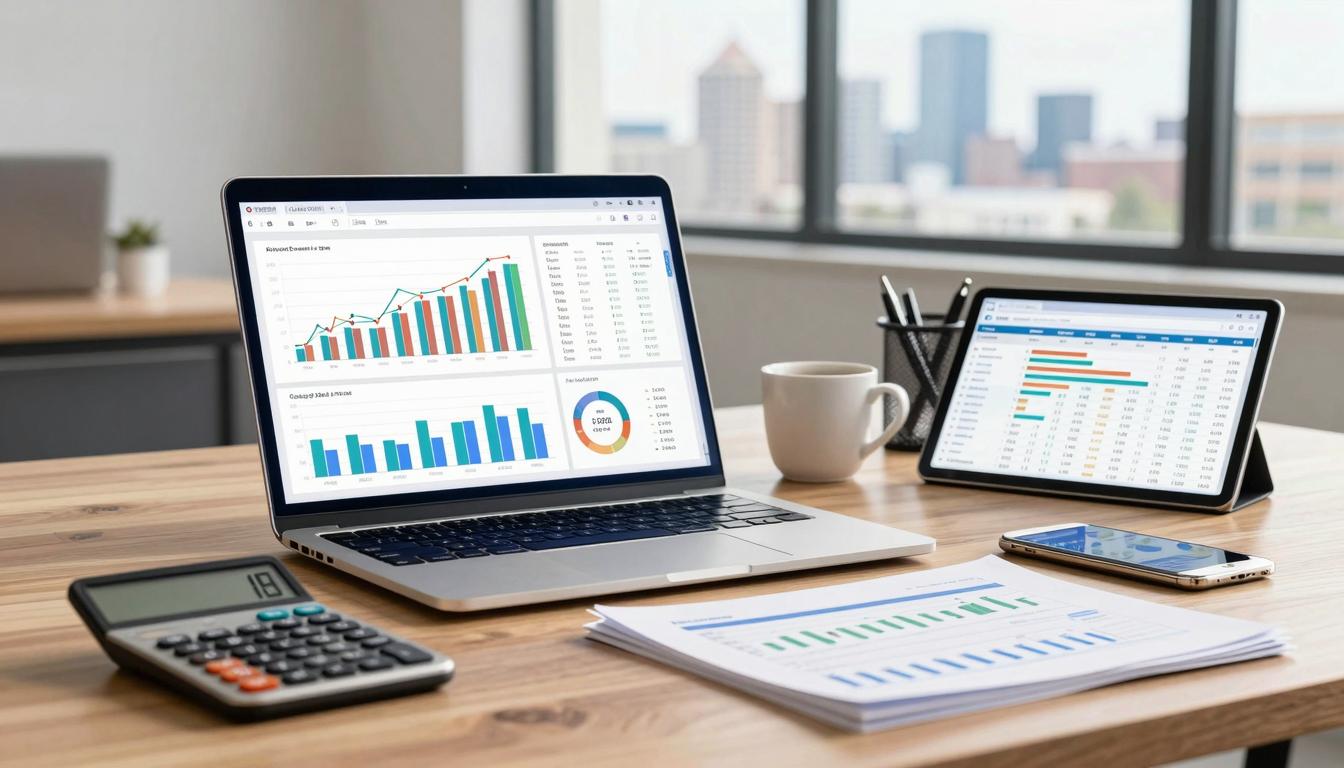
Leveraging Data Analytics for Smarter Financial Reporting
Leveraging data analytics for smarter financial reporting is transforming the way businesses understand their financial health and make strategic decisions. Traditional financial reporting often relies on static numbers and historical data, which can limit insights and responsiveness. However, the integration of advanced data analytics enables companies to gather, process, and interpret large volumes of financial information in real time. This shift allows for deeper analysis, improved accuracy, and more timely reporting. In this article, we explore how organizations can harness data analytics to enhance financial reporting, from automating data collection to predictive forecasting, ultimately driving smarter business outcomes. By understanding and applying these techniques, finance professionals can move beyond conventional reports to become strategic advisors within their companies.
Enhancing data accuracy and automation
One of the key benefits of leveraging data analytics in financial reporting is the significant improvement in data accuracy. Automated data collection tools reduce manual entry errors, which are common in traditional reporting processes. By integrating various financial systems and databases, data analytics platforms can consolidate information seamlessly, ensuring consistency across reports.
Automation also frees up valuable time for finance teams. Rather than spending hours reconciling data, professionals can focus on interpreting results and providing strategic insights. Reporting cycles become faster and more efficient, enabling timely decision-making. Additionally, automated validation rules can flag inconsistencies or outliers early on, minimizing the risk of financial misstatements.
Real-time monitoring and dynamic reporting
Unlike static reports, data analytics offers the advantage of real-time monitoring. Businesses can track financial performance as transactions occur, rather than waiting for end-of-month or quarterly summaries. This continuous visibility helps identify trends, spot irregularities, and respond to changes promptly.
Dynamic dashboards and interactive reports allow users to drill down into specific metrics, such as revenue streams, expenses, or cash flow trends, offering a multidimensional view of financial health. These tools also support scenario analysis by enabling stakeholders to adjust parameters and forecast various outcomes instantly. The agility gained through dynamic reporting facilitates proactive financial management.
Predictive analytics for foresight and planning
Beyond current and past data, predictive analytics plays a crucial role in smarter financial reporting. By applying algorithms and machine learning models to historical and real-time data, companies can forecast future financial performance with greater accuracy.
This foresight helps in budgeting, risk assessment, and strategic planning. For example, organizations can predict cash flow shortages, revenue fluctuations, or expense spikes, allowing management to take preventive measures. Predictive insights also enhance investment decisions and resource allocation, driving long-term financial stability.
Improving compliance and stakeholder communication
Effective financial reporting must meet regulatory requirements and satisfy stakeholder demands for transparency. Data analytics supports compliance by enabling detailed audit trails and ensuring that reports align with accounting standards.
Moreover, analytics-driven reports can be tailored for different audiences, such as investors, regulatory bodies, or internal executives, providing relevant insights in digestible formats. Enhanced communication fosters trust and informs more nuanced discussions about financial strategy.
| Benefit | Description | Impact |
|---|---|---|
| Data accuracy and automation | Reduces errors via automated data consolidation and validation | Faster reporting cycle; reduced risk of misstatements |
| Real-time monitoring | Provides continuous insight into financial performance | Enables prompt decision-making and trend identification |
| Predictive analytics | Uses historical data to forecast future financial outcomes | Improves budgeting and strategic planning |
| Compliance and communication | Ensures reporting meets standards and communicates clearly | Builds stakeholder trust and regulatory adherence |
Conclusion
Leveraging data analytics for smarter financial reporting is no longer optional but essential for companies seeking competitive advantage and operational excellence. By automating data collection and validation, organizations ensure higher accuracy and efficiency. Real-time, dynamic reporting provides continuous financial insights, enabling agile decision-making. Predictive analytics further enhances these capabilities by offering foresight that supports better planning and risk management. Finally, using data analytics improves compliance and communication, fostering stronger relationships with stakeholders. Together, these capabilities create a comprehensive framework for smarter financial reporting that not only reflects past performance but also drives future growth and resilience.
Image by: Lukas
https://www.pexels.com/@goumbik

news via inbox
Nulla turp dis cursus. Integer liberos euismod pretium faucibua