How Cloud Accounting Enhances Small and Medium Business Efficiency
How cloud accounting enhances small and medium business efficiency
In today’s fast-paced business environment, small and medium-sized enterprises (SMEs) face constant pressure to optimize operations while minimizing costs. One significant advancement helping businesses maintain competitive edges is cloud accounting. This innovation transforms traditional bookkeeping by enabling companies to access financial data online, automate processes, and collaborate seamlessly. By moving accounting functions to the cloud, SMEs gain agility, accuracy, and real-time insights that drive better decision-making and operational efficiency. This article explores how cloud accounting improves various aspects of SME operations—from streamlining workflows to enhancing financial transparency—ultimately empowering business owners to focus on growth and strategic priorities rather than manual administrative tasks.
Streamlining financial workflows through automation
One of the most notable benefits of cloud accounting for SMEs is the automation of routine financial tasks. Systems hosted in the cloud can automatically import bank transactions, generate invoices, and reconcile accounts without manual input. This automation reduces human error and frees up valuable time for business owners and accounting teams. Additionally, automatic updates and backups ensure that data is secure and current, minimizing downtime and the risk of lost information. Workflow tools integrated into cloud platforms also facilitate approvals and notifications, speeding up processes such as expense reimbursements and payroll, which are traditionally time-consuming.
Improving real-time financial visibility and decision-making
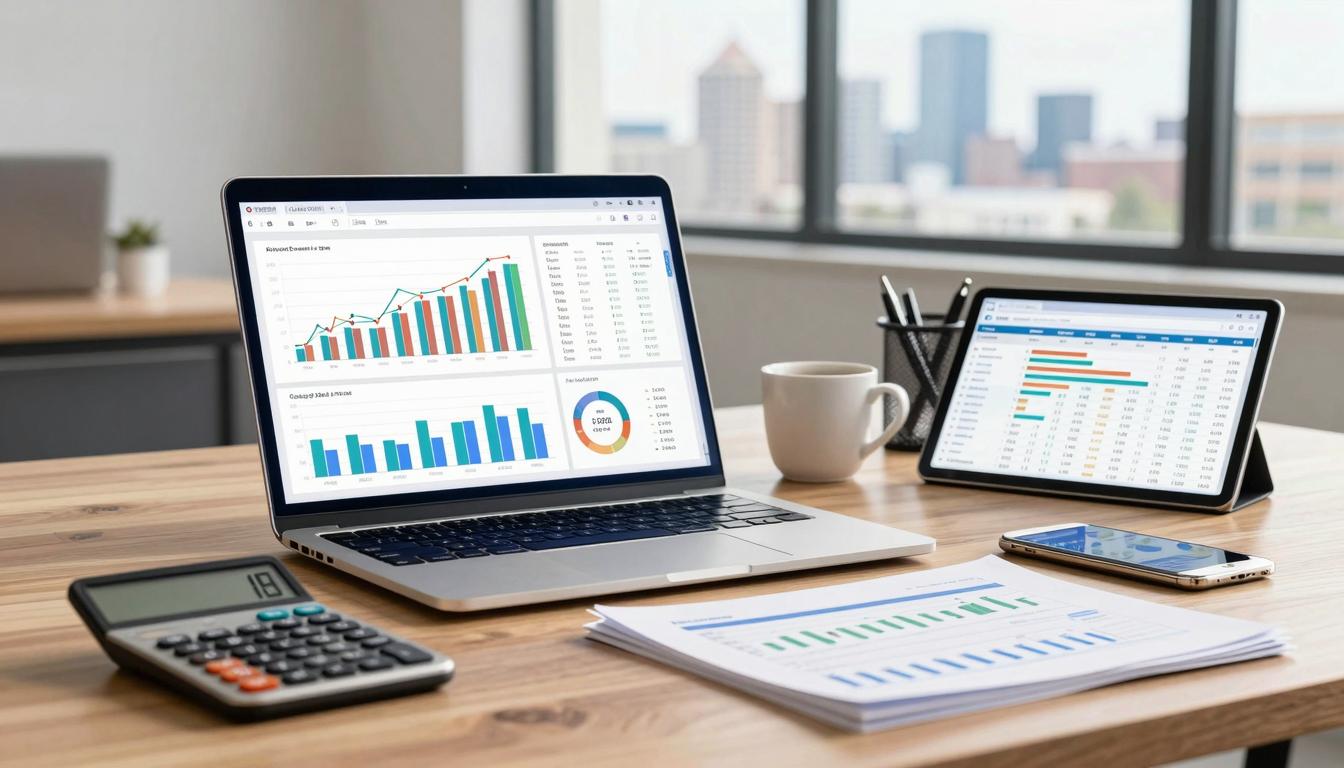
Cloud accounting allows SMEs to view accurate, up-to-date financial information anytime, anywhere—on any device. This instant access is a game changer for business strategy because owners and managers can quickly assess cash flow, monitor expenses, and forecast future performance. Real-time dashboards and customizable reports provide insights that help identify trends and potential risks early. Access to this data improves agility, allowing companies to pivot or seize opportunities without waiting for manual reports, which can lag days or weeks behind actual transactions.
Enhancing collaboration between teams and external professionals
Collaboration is another domain where cloud accounting excels. Because the data is stored online, multiple users can access and work on the same records simultaneously without version conflicts. This capability fosters better communication between in-house accounting staff, management, and external advisors such as accountants or tax consultants. By sharing a single source of truth, SMEs avoid duplication of efforts and miscommunication that can cause costly errors. Furthermore, many cloud platforms include secure client portals, improving transparency and client interactions for businesses offering bookkeeping or financial services.
Cost savings and scalability advantages
For SMEs operating with limited budgets, cloud accounting offers significant cost efficiencies. Traditional accounting software often requires expensive licenses, installations, and IT maintenance, which can strain resources. By contrast, cloud solutions typically operate on a subscription model with lower upfront costs and minimal hardware requirements. This pricing flexibility makes it easier for businesses to scale their accounting systems up or down depending on growth or seasonality. Additionally, many cloud providers regularly update features and security measures without extra charges, ensuring SMEs always have access to the latest innovations without disruptive upgrades or additional fees.
| Benefit | Impact on SMEs | Example |
|---|---|---|
| Automation | Reduces errors and saves time on repetitive tasks | Automatic bank reconciliation |
| Real-time access | Enables faster, data-driven decisions | Instant cash flow dashboards |
| Collaboration | Improves communication and reduces misalignment | Shared access for accountants and managers |
| Cost efficiency | Lowers upfront software costs and IT needs | Subscription-based pricing with cloud updates |
Conclusion
Cloud accounting significantly enhances the efficiency of small and medium businesses by automating financial workflows, providing real-time financial visibility, fostering collaboration, and offering cost-effective scalability. These advantages collectively enable SMEs to operate with greater accuracy and agility, freeing resources to focus on growth-oriented activities. By leveraging cloud-based solutions, business owners can overcome traditional bookkeeping challenges and better navigate the complexities of financial management. Ultimately, cloud accounting serves as a catalyst for smarter decision-making, improved operational performance, and stronger competitive positioning in today’s dynamic market landscape.
Image by: Mikhail Nilov
https://www.pexels.com/@mikhail-nilov

news via inbox
Nulla turp dis cursus. Integer liberos euismod pretium faucibua