
Essential Performance Metrics and KPI Dashboards for Modern Finance Teams
Essential performance metrics and KPI dashboards for modern finance teams are crucial tools that help organizations stay competitive and financially healthy in today’s fast-paced business environment. As finance teams face growing complexities, from managing cash flow to forecasting future trends, relying on accurate, real-time data becomes indispensable. Well-designed performance metrics and dashboards enable finance professionals to monitor financial health, streamline reporting, and make informed decisions quickly. This article explores key performance indicators (KPIs) that modern finance teams should track and how effective dashboards can transform raw data into actionable insights. By understanding and implementing these tools, finance departments can enhance transparency, improve efficiency, and drive strategic growth.
Identifying the most important performance metrics
For modern finance teams, selecting the right metrics is vital. These metrics should provide a clear view of financial stability, operational efficiency, and growth prospects. Some of the essential financial performance metrics include:
- Cash flow from operations: Measures the liquidity a company generates from its core business, indicating whether the firm can sustain operations without external financing.
- Net profit margin: Shows the percentage of revenue that remains after all expenses, a key indicator of profitability.
- Days sales outstanding (DSO): Reveals the average number of days it takes to collect payment from customers, reflecting credit and collection effectiveness.
- Return on equity (ROE): Highlights how efficiently a company uses shareholders’ equity to generate profit.
- Budget variance: Compares actual versus planned financial results, crucial for understanding deviations and guiding adjustments.
Choosing metrics aligned with company goals ensures finance teams focus on what truly drives performance.
The role of KPI dashboards in financial decision-making
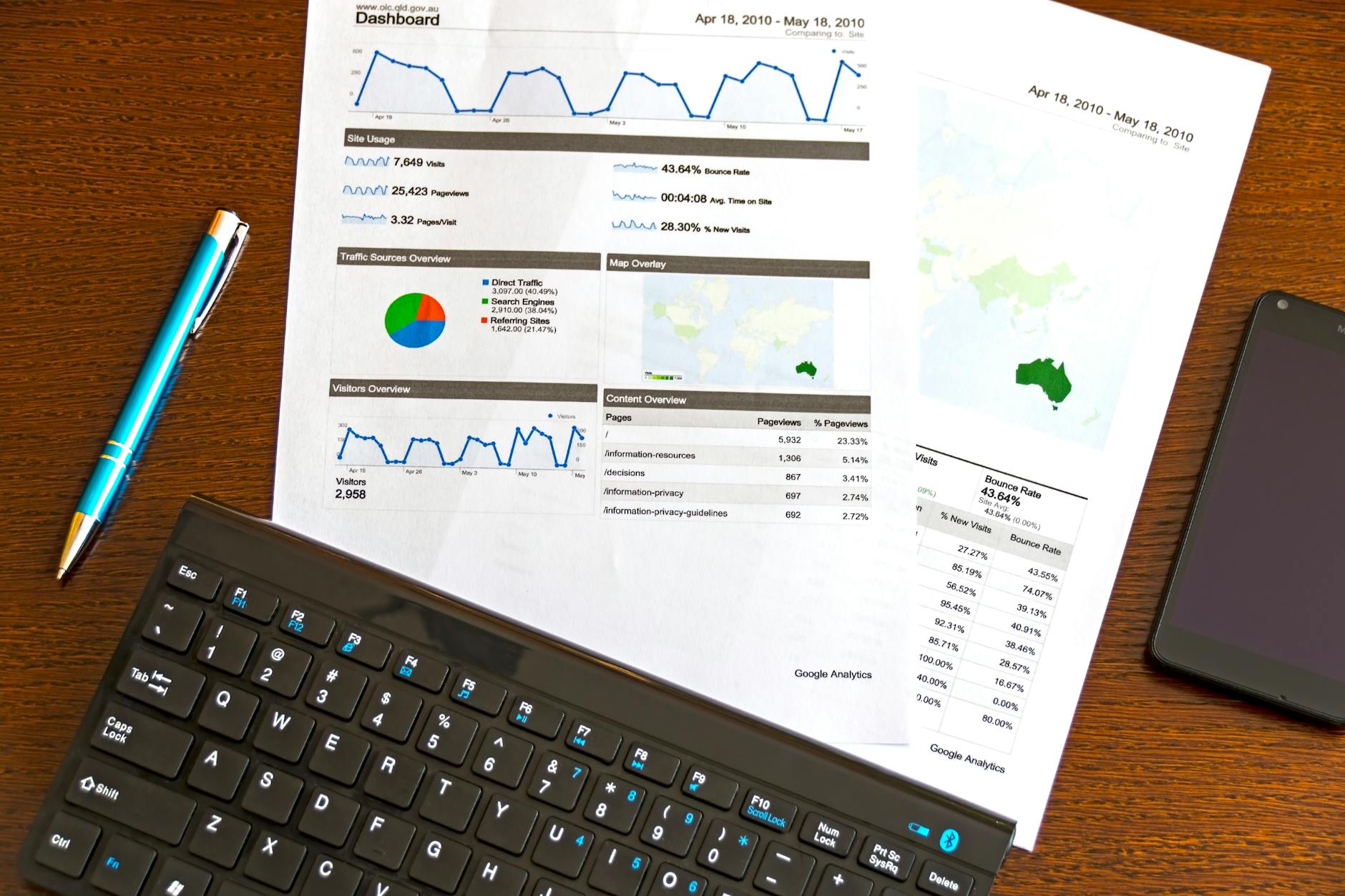
KPI dashboards serve as centralized hubs where key financial data is visualized in real-time. They offer several advantages:
- Consolidation of complex data: Multiple financial metrics are aggregated into an intuitive interface.
- Quick identification of trends: Dashboards highlight positive or negative trends early, supporting proactive management.
- Customizability: Teams can tailor dashboards to track metrics that matter most to their specific roles and objectives.
- Improved collaboration: Shared dashboards foster alignment between finance and other departments by providing transparent data.
By transforming numeric data into visual insights, KPI dashboards empower executives and analysts alike to make timely, informed decisions that drive business success.
Integrating predictive analytics for proactive finance management
While traditional financial metrics focus on historical data, integrating predictive analytics within KPI dashboards enables finance teams to anticipate future outcomes. With machine learning models and scenario analysis, teams can:
- Forecast cash flows with greater accuracy
- Predict revenue fluctuations based on market or seasonal trends
- Identify potential risks related to credit, operational costs, or investments
- Simulate the financial impact of strategic initiatives such as pricing changes or cost reductions
Embedding predictive capabilities transforms dashboards from dashboards from reactive reporting tools into engines for strategic foresight.
Ensuring data accuracy and consistency across systems
One of the biggest challenges finance teams face is maintaining data integrity. Without accurate, consistent data inputs, even the best dashboards and metrics lose their value. To address this, finance teams should:
- Implement standardized data entry protocols and reconciliation processes
- Use integrated financial software systems that reduce manual data manipulation
- Regularly audit data sources and update data cleansing rules
- Train staff on data governance best practices
Reliable data infrastructure builds a foundation for credible metrics and reports, which in turn strengthens decision-making and trust among stakeholders.
Summary of essential metrics and dashboard benefits
| Metric | Purpose | Impact on decision-making |
|---|---|---|
| Cash flow from operations | Liquidity analysis | Ensures business sustainability without external funding |
| Net profit margin | Profitability evaluation | Guides pricing and cost management |
| Days sales outstanding (DSO) | Collection efficiency | Improves working capital management |
| Return on equity (ROE) | Shareholder value focus | Measures effectiveness of equity usage |
| Budget variance | Performance tracking | Highlights deviations and supports corrective actions |
In conclusion, modern finance teams must leverage essential performance metrics and well-structured KPI dashboards to navigate complex business environments successfully. By focusing on key financial indicators such as cash flow, profitability, and operational efficiency, teams gain clarity and control over their financial health. KPI dashboards then distill these metrics into accessible, visual insights, promoting faster and more collaborative decision-making across departments. Integrating predictive analytics further enhances the ability to anticipate challenges and seize opportunities proactively. However, none of these advantages can be realized without a strong commitment to data accuracy and consistency. Ensuring reliable, high-quality data underpins every effective financial strategy. Ultimately, embracing these tools empowers finance teams to drive sustainable growth, optimize resource allocation, and deliver greater value to their organizations in an ever-evolving financial landscape.
Image by: AS Photography
https://www.pexels.com/@asphotograpy

news via inbox
Nulla turp dis cursus. Integer liberos euismod pretium faucibua



