Cloud Accounting Solutions Tailored for Small and Medium Businesses
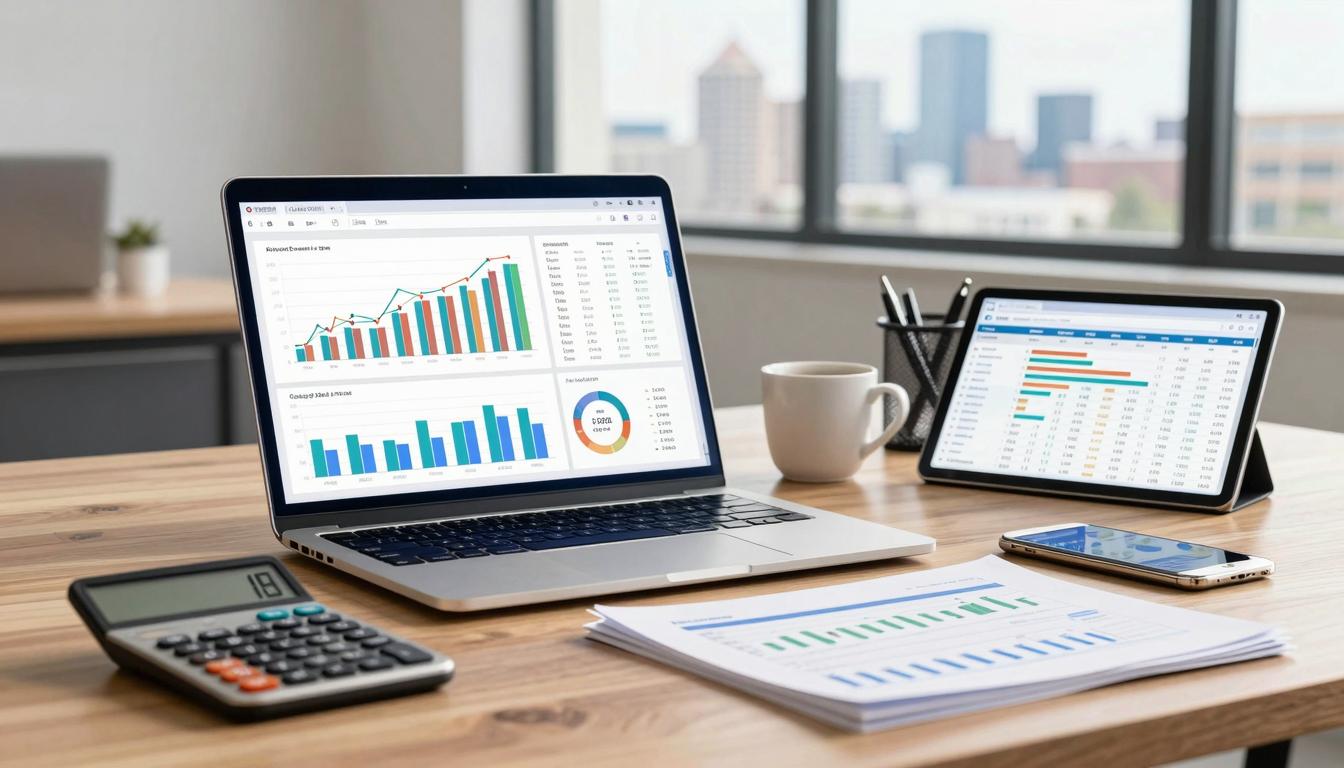
Cloud accounting solutions tailored for small and medium businesses are revolutionizing the way companies manage their finances. As these businesses face unique challenges such as limited resources, fluctuating cash flow, and the need for scalability, cloud accounting offers a flexible and cost-effective alternative to traditional accounting software. By leveraging internet-based platforms, small and medium-sized enterprises (SMEs) can access real-time financial data, streamline bookkeeping processes, and enhance collaboration with accountants and stakeholders. This article explores the core benefits of cloud accounting for SMEs, addresses key features to consider when selecting a solution, and highlights how these tools can support business growth and compliance requirements.
Understanding the benefits of cloud accounting for SMEs
One of the primary advantages of cloud accounting for small and medium businesses is accessibility. Unlike desktop-based accounting software, cloud accounting platforms allow users to log in from anywhere with internet access, enabling remote work and timely financial decisions. This flexibility is especially valuable for SMEs that may not have a dedicated accounting department.
Furthermore, cloud accounting solutions offer scalability that aligns with business growth. Many platforms provide modular pricing and features, meaning businesses only pay for what they need and can upgrade as their complexity increases. This adaptability helps control expenses while ensuring the software grows alongside the organization.
Security is often a concern for SMBs but cloud providers usually invest heavily in data protection measures, including encryption, multi-factor authentication, and regular backups. This often surpasses the security standards small companies can afford individually.
Key features to look for in cloud accounting software
When selecting a cloud accounting solution, SMEs should focus on several critical features to maximize efficiency and compliance:
- Automated bookkeeping: Reducing manual data entry through bank feeds and receipt scanning saves time and reduces errors.
- Real-time reporting and dashboards: Instant access to financial reports helps owners and managers monitor KPIs and cash flow effectively.
- Multi-user collaboration: Allowing accountants, bookkeepers, and business partners to access the system simultaneously improves communication and workflow.
- Integration capabilities: Seamless integration with payroll, inventory management, and CRM systems ensures operations remain connected.
- Compliance and tax support: Features that automate tax calculations and filings help avoid penalties and simplify year-end processes.
How cloud accounting drives business growth and decision-making
Beyond basic bookkeeping, cloud accounting empowers SMEs to make informed strategic decisions. The availability of real-time data means business owners can track expenses, revenue trends, and profit margins continuously. This insight supports budgeting, cash flow forecasting, and identifying cost-saving opportunities.
Moreover, many cloud platforms use artificial intelligence and machine learning to detect anomalies, suggest optimizations, and automate repetitive tasks. This boosts productivity, allowing SMEs to focus more on core business activities and customer engagement.
Cloud accounting tools also foster better collaboration with external accountants or financial advisors by providing a unified platform where all records are transparent and up-to-date. This cooperation improves financial planning and audit readiness.
Cost considerations and choosing the right provider
Cost efficiency remains a decisive factor for SMEs when adopting cloud accounting. While subscription pricing usually ranges between $10 to $70 per month depending on features and users, it is critical to assess the total value rather than just the price. Low-cost options may lack essential integrations or support, leading to hidden expenses over time.
The following table summarizes cost and feature trade-offs of popular cloud accounting solutions tailored for SMEs:
| Provider | Monthly cost (starting) | Key features | Ideal for |
|---|---|---|---|
| QuickBooks Online | $25 | Invoice management, bank feeds, payroll integration | Small businesses seeking all-in-one solution |
| Xero | $12 | Multi-currency, real-time collaboration, inventory tracking | Growing SMEs with international transactions |
| FreshBooks | $15 | Time tracking, expense management, client portals | Service-based businesses and freelancers |
Choosing a solution aligned with business needs and budget ensures a smoother transition and higher ROI.
In conclusion, cloud accounting solutions present a compelling proposition for small and medium businesses aiming to enhance financial management while accommodating growth. Their accessibility, scalability, and robust feature sets address many limitations faced by SMEs using traditional methods. By adopting cloud-based accounting, companies can streamline processes, improve accuracy, and gain actionable insights in real time. Furthermore, the enhanced collaboration between business owners and accountants optimizes decision-making.
The decision to implement cloud accounting should be based on a thorough assessment of required features, budget, and long-term business strategy. With the right solution, SMEs not only simplify accounting tasks but also create a solid foundation for sustainable success in an increasingly digital business environment.
Image by: Igor Passchier
https://www.pexels.com/@igor-passchier-111147847

news via inbox
Nulla turp dis cursus. Integer liberos euismod pretium faucibua