Innovative Accounting Software Integrations to Boost Small Business Efficiency
Innovative accounting software integrations are transforming how small businesses manage their finances. By seamlessly connecting different business tools, these integrations streamline workflows, reduce errors, and provide real-time insights that drive better decision-making. Small business owners often juggle multiple software platforms for invoicing, payroll, inventory, and banking, which can lead to inefficiencies and increased operational costs. The integration of accounting software with other key applications eliminates redundant data entry, accelerates financial reporting, and enhances overall accuracy. This article explores the most impactful accounting software integrations designed to boost efficiency for small businesses, highlighting practical solutions and benefits that help entrepreneurs save time, minimize errors, and focus on growth.
Connecting accounting with payment processing platforms
One of the primary pain points for small businesses is the hassle of reconciling payments and invoices. Integrating accounting software with payment services like Stripe, PayPal, or Square enables automatic syncing of transaction data. This integration ensures that sales entries, customer payments, and fees are updated in real time, reducing manual reconciliation efforts and minimizing discrepancies.
Benefits of integrating payment processors with accounting software include:
- Faster cash flow management – instantly track payments and outstanding invoices.
- Improved accuracy – eliminate manual entry errors in financial records.
- Detailed reporting – combine sales data with expense tracking for comprehensive financial reports.
Inventory management and accounting integration
For small businesses dealing with physical products, inventory management tied to accounting systems is essential. Integration between inventory software (e.g., TradeGecko, Zoho Inventory) and accounting platforms helps maintain correct stock levels and automatically updates cost of goods sold (COGS) as sales occur. This linkage improves budgeting and financial forecasting by accurately reflecting inventory value in financial statements.
Such integration benefits small businesses by:
- Providing real-time inventory tracking directly linked to financial outcomes.
- Automating reordering processes to avoid stockouts or excess inventory.
- Aligning warehouse and accounting teams with unified data.
Automating payroll and human resources functions
Payroll and HR are resource-intensive functions for small businesses but remain critical for compliance and employee satisfaction. Integrating payroll systems like Gusto or ADP with accounting software reduces administration time and payroll errors. This integration ensures employee salaries, tax withholdings, and benefits are accurately recorded and reflected in financial accounts.
Key advantages include:
- Automatic tax calculations and timely filing reminders.
- Streamlined employee record management and reporting.
- Reduced reliance on manual spreadsheets and paper-based systems.
Leveraging data analytics through integrated dashboards
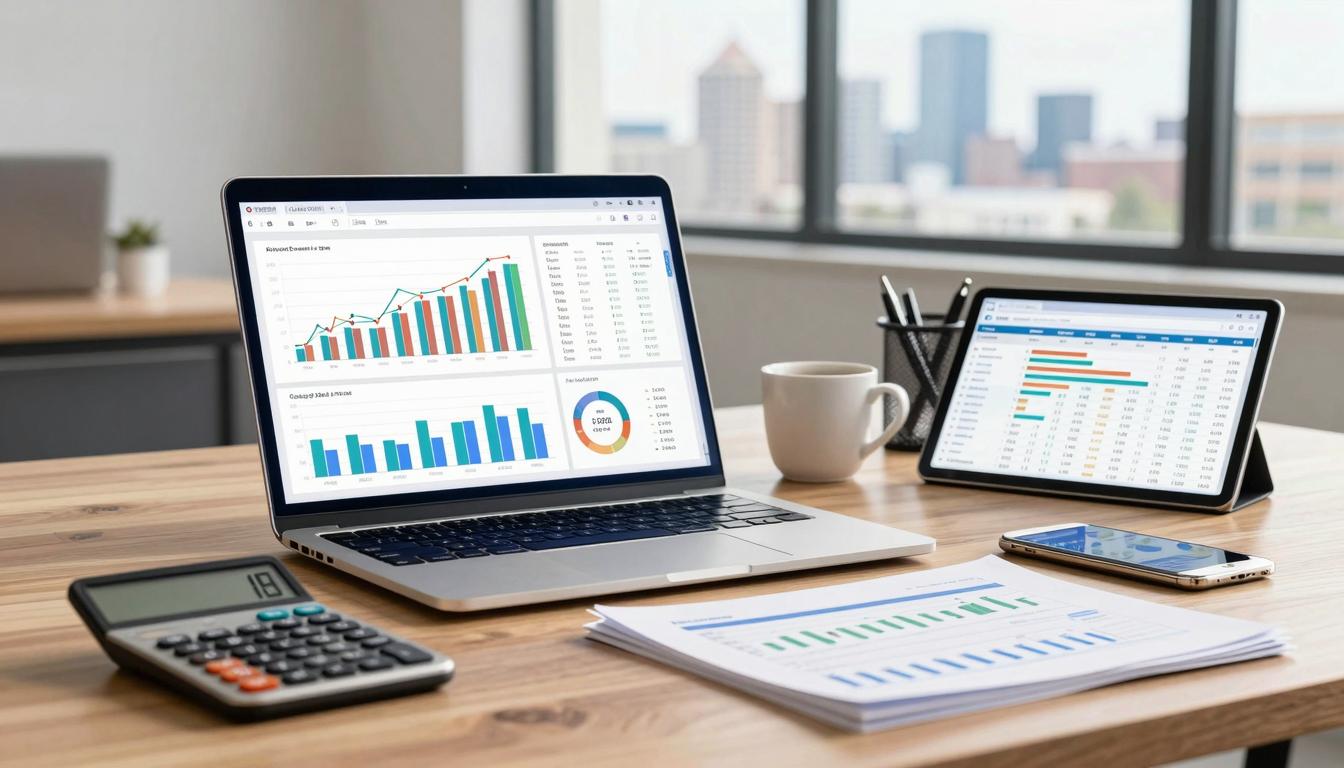
Accounting software integrations often come bundled with advanced analytics and dashboard tools. These dashboards consolidate data from sales, expenses, payroll, and inventory, enabling small business owners to visualize financial health in a single interface. Integrating these analytics tools allows businesses to spot trends, identify inefficiencies, and make data-driven decisions faster.
Common features include customizable KPIs, cash flow forecasts, and expense tracking segmented by department or project.
| Integration type | Typical software examples | Main benefits |
|---|---|---|
| Payment processing | Stripe, PayPal, Square | Faster payment reconciliation, reduced errors, detailed financial reports |
| Inventory management | TradeGecko, Zoho Inventory | Accurate stock levels, real-time COGS updates, better cash flow forecasting |
| Payroll and HR | Gusto, ADP | Compliance ease, automated tax calculations, accurate employee records |
| Data analytics dashboards | Power BI, Tableau, integrated accounting dashboards | Improved decision-making, KPI tracking, comprehensive financial visibility |
In summary, innovative accounting software integrations are indispensable tools for small businesses aiming to enhance operational efficiency. By linking payment processors, inventory management, payroll, and analytics platforms with accounting systems, businesses can automate routine tasks, reduce errors, and access real-time financial insights. These integrations not only save time but empower owners to make more informed decisions, optimize resources, and maintain regulatory compliance. As small businesses navigate increasingly complex financial landscapes, adopting these integrations provides a competitive edge that supports sustained growth. To thrive, small business owners should prioritize integrated solutions that align with their unique operational needs and scale with their ambitions.
Image by: Jenny Tran
https://www.pexels.com/@jenny-tran-2155428053

news via inbox
Nulla turp dis cursus. Integer liberos euismod pretium faucibua