Maximizing Efficiency with Cloud Accounting Solutions for SMBs
Maximizing Efficiency with Cloud Accounting Solutions for SMBs
Introduction
Small and medium-sized businesses (SMBs) today face unprecedented pressure to streamline operations while maintaining accuracy in financial management. Traditional accounting methods, often reliant on outdated software and manual processes, drain valuable resources and leave room for costly errors. Cloud accounting solutions have emerged as a game-changer for SMBs seeking to optimize their financial workflows without the burden of heavy infrastructure investments. This article explores how cloud accounting platforms can transform your business operations, from automating routine tasks to providing real-time financial insights. We will examine the key benefits, implementation strategies, and practical steps SMBs can take to harness the full potential of cloud-based accounting systems, ultimately driving growth and profitability.
Understanding cloud accounting and its foundational advantages
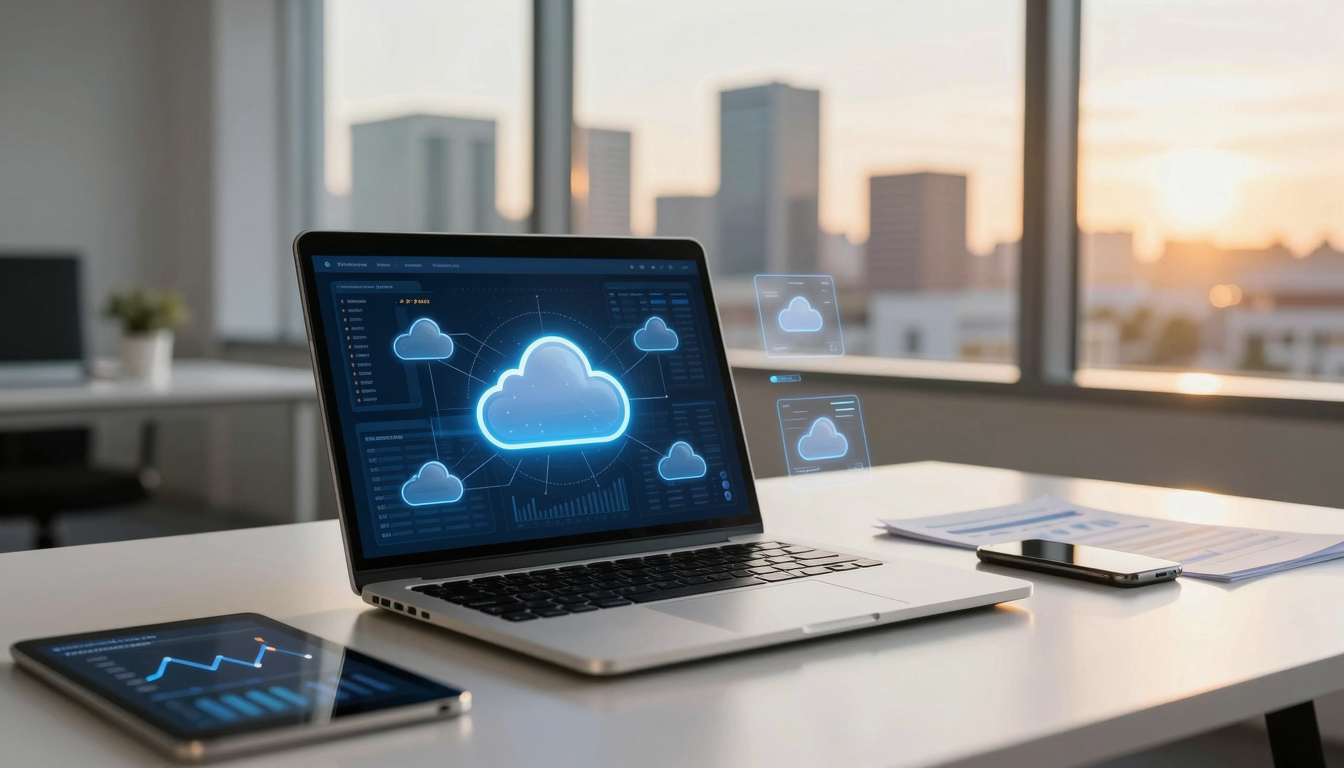
Cloud accounting represents a fundamental shift in how businesses manage their financial records. Rather than relying on desktop software installed on individual computers, cloud accounting operates through web-based platforms accessible from anywhere with an internet connection. This accessibility alone provides SMBs with flexibility that traditional systems simply cannot match.
The architecture of cloud accounting systems is built on the principle of centralized data storage and processing. Your financial information resides on secure servers maintained by the provider, eliminating the need for costly IT infrastructure. This shift carries profound implications for SMBs operating with limited technical resources.
Cost reduction stands as one of the most compelling advantages. Traditional accounting software requires significant upfront capital investment, ongoing maintenance, and periodic expensive upgrades. Cloud solutions typically operate on subscription-based models, transforming large capital expenditures into predictable operational expenses. Many SMBs find their total cost of ownership decreases dramatically within the first year of adoption.
Accessibility represents another cornerstone benefit. Your accountant can work from the office, at home, or while traveling. Multiple team members can access the same information simultaneously without version control headaches or conflicting changes. This real-time collaboration capability eliminates the bottlenecks that plague traditional systems where information must be passed between users sequentially.
Data security, often cited as a concern, is actually enhanced through cloud solutions. Cloud accounting providers invest heavily in security infrastructure that most SMBs could never afford independently. Features like encryption, automatic backups, and disaster recovery protocols protect your financial data more comprehensively than local storage solutions.
Automation and the elimination of repetitive tasks
One of the most transformative aspects of cloud accounting solutions is their capacity to automate routine financial tasks. This automation extends far beyond simple calculations, touching virtually every aspect of the accounting workflow.
Invoice management becomes significantly streamlined. Rather than manually entering customer information and line items, cloud systems can automatically generate invoices from sales data. Many platforms integrate directly with your sales channels, pulling transaction details automatically. Customers can receive invoices instantly upon purchase completion, accelerating cash flow cycles. Automated reminders can be sent for overdue payments, reducing collection times.
Bank reconciliation, traditionally a time-consuming monthly chore, transforms into an ongoing automated process. Cloud accounting systems connect directly to your bank accounts through secure API connections. Transactions are matched automatically, categorized according to predefined rules, and flagged for review when necessary. What once consumed hours of manual work now happens continuously with minimal human intervention.
Expense tracking follows a similar pattern of automation. Instead of collecting receipts and entering expenses manually, employees can photograph receipts using mobile apps. The system uses optical character recognition (OCR) technology to extract key information automatically. These expenses are categorized, allocated to the correct cost centers, and made available for manager approval within minutes rather than weeks.
Payroll processing represents another area where automation delivers substantial value. Cloud accounting systems can integrate with payroll services to calculate wages, deductions, and taxes automatically. Compliance with changing tax regulations happens without requiring manual updates from your team. Direct deposit arrangements ensure employees receive payments reliably while reducing check-writing tasks entirely.
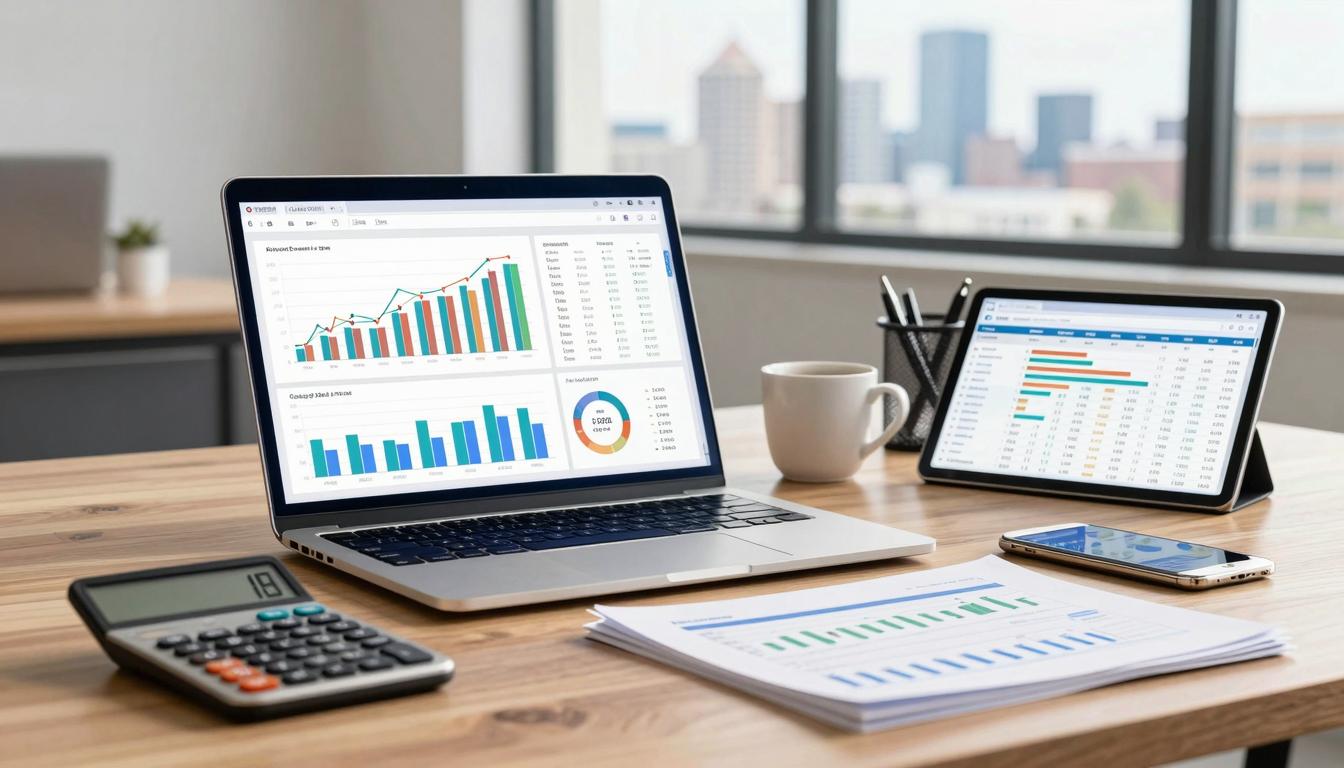
Financial reporting transforms from a labor-intensive undertaking into an on-demand function. Rather than assembling data from multiple sources and constructing reports manually, cloud systems generate comprehensive financial statements instantly. These reports can be customized, scheduled for automatic distribution, and accessed in real-time whenever needed.
Real-time financial visibility and data-driven decision making
Cloud accounting solutions fundamentally change how SMB owners and managers access financial information. Where traditional accounting once provided snapshots of financial health only after month-end closing processes, cloud systems offer continuous visibility into business performance.
This real-time visibility enables decision-making based on current data rather than historical information that may be several weeks old. A manager concerned about cash flow can check the current balance immediately and review outstanding invoices and upcoming payments. If a customer’s large order unexpectedly falls through, the impact on cash reserves is visible instantly, allowing for rapid contingency planning.
Dashboards and customizable reporting provide executives with the specific metrics most relevant to their operations. Rather than wading through detailed financial statements, owners can view key performance indicators tailored to their business model. A retail business might focus on inventory turnover and margin analysis, while a service company might prioritize billable utilization rates and project profitability.
Profitability analysis becomes granular and actionable. Cloud systems allow you to drill down into profitability by product, service, customer, or project. If particular offerings consistently generate lower margins than expected, this becomes apparent quickly. You can then make informed decisions about pricing, resource allocation, or product mix adjustments based on concrete data.
Cash flow projections improve substantially with cloud-based information. By analyzing historical patterns and current outstanding receivables and payables, the system can project future cash positions. This forward-looking perspective allows SMBs to plan for seasonal fluctuations, anticipate financing needs, or identify opportunities for cash optimization.
The integration of cloud accounting with other business systems amplifies these benefits. When your accounting platform connects with inventory management, CRM, or project management systems, a complete picture of business performance emerges. A sales figure in the accounting system connects to customer information in the CRM and project details in the project management tool, creating a comprehensive view of operations.
Integration capabilities and ecosystem development
Modern cloud accounting platforms rarely operate in isolation. Instead, they function as central hubs within an integrated technology ecosystem. This interconnectedness multiplies the efficiency gains available to SMBs.
Payment processing integration represents a practical example. Rather than manually entering payment information into the accounting system after receiving payment notifications from multiple channels, cloud solutions can connect directly to payment processors. When a customer pays via credit card, the payment is automatically recorded in the accounting system, categorized correctly, and reflected in real-time financial reports.
CRM integration ensures that customer financial information flows seamlessly into accounting workflows. A sales representative can view a customer’s payment history and outstanding balances without leaving the CRM interface. Conversely, an accountant managing collections can understand the customer relationship context without manually looking up sales information elsewhere.
E-commerce platform integration enables SMBs selling online to have their accounting automatically updated as sales occur. Inventory is tracked in real-time, revenue is recorded appropriately, and tax calculations are performed automatically based on customer location and product type. This integration eliminates manual reconciliation work that plagues many online retailers.
Project management and time tracking integration allows service-based businesses to transform hours tracked into billable invoices automatically. If your team uses project management software to track time spent on client projects, cloud accounting can pull that information and generate accurate invoices based on rates and project allocations already established in the system.
| Integration Type | Manual Effort Reduction | Error Reduction | Time Saved Monthly |
|---|---|---|---|
| Payment Processing | 90% | 95% | 8-12 hours |
| Bank Reconciliation | 85% | 98% | 6-10 hours |
| E-commerce Platforms | 80% | 92% | 10-15 hours |
| Payroll Systems | 75% | 99% | 4-8 hours |
| Expense Management | 70% | 85% | 5-8 hours |
This ecosystem approach extends to compliance and tax functions. Cloud accounting platforms can integrate with tax software, ensuring that tax-relevant information is properly classified and available when tax preparation time arrives. Some systems even prepare estimated quarterly tax payments automatically based on income and expense data.
API connections allow custom integrations tailored to specific business needs. If your SMB uses specialized software for industry-specific functions, cloud accounting platforms can often connect to those systems through APIs, creating a customized ecosystem that serves your unique requirements.
Implementation strategy and change management for SMBs
Successfully transitioning to cloud accounting requires more than simply signing up for a service. SMBs must approach implementation strategically to maximize benefits and minimize disruption.
The first consideration involves selecting the appropriate solution. Cloud accounting platforms range from simple systems designed for sole proprietors to comprehensive solutions supporting complex organizational structures. An SMB should assess its current accounting needs, anticipated growth, integration requirements, and team technical capability. Opting for excessive functionality wastes resources, while choosing an underpowered solution creates frustration when limitations emerge.
Data migration represents the most critical implementation phase. Historical financial information must be transferred accurately from existing systems. This process requires careful planning and typically involves mapping old account structures to new ones. Most successful migrations involve running both systems in parallel for a period, allowing teams to verify accuracy before fully committing to the new system. This parallel run might extend several weeks or months depending on data complexity.
Staff training cannot be overlooked. Accounting personnel accustomed to traditional software require time to learn new interfaces and workflows. Providing comprehensive training before go-live reduces errors and frustration. Many cloud providers offer training resources, and some SMBs invest in professional onboarding services that accelerate adoption. The training investment pays dividends through faster proficiency achievement and reduced support requirements.
Workflow redesign often accompanies cloud accounting adoption. Since cloud systems enable new capabilities, accounting processes themselves may need adjustment. For instance, if invoice approval workflows previously required physical signatures, cloud systems might implement digital approval processes. Teams should work together to redesign workflows that take advantage of cloud capabilities rather than simply replicating old processes in the new system.
Change management addresses the human element of implementation. Accounting staff may worry about job security or feel overwhelmed by new technology. Clear communication about how cloud adoption will change roles rather than eliminate them helps ease concerns. Emphasizing how automation frees staff to focus on higher-value analysis and strategic work rather than data entry encourages acceptance rather than resistance.
Post-implementation support proves essential. Cloud providers typically offer support resources, but SMBs should designate internal champions who become proficient with the system and support colleagues. Many organizations find value in regular check-in meetings during the first few months following implementation, addressing questions and optimizing configurations as teams become comfortable with the system.
Conclusion
Cloud accounting solutions represent a transformative opportunity for SMBs seeking to enhance financial management efficiency and accuracy. The advantages extend far beyond cost savings to encompass improved accessibility, enhanced data security, and substantially reduced manual workload. Through automation of routine tasks, real-time financial visibility, and seamless integration with other business systems, cloud accounting empowers SMB managers and owners to make better decisions faster. Implementation requires thoughtful planning and change management, but the investment pays dividends through operational improvements that compound over time. As SMBs grow, scalable cloud solutions grow with them without requiring infrastructure overhauls or costly migrations. The competitive advantage secured through cloud accounting adoption becomes increasingly significant as business complexity increases. For SMBs serious about optimizing operations and establishing foundations for sustainable growth, transitioning to cloud accounting solutions is not merely advisable but increasingly essential in today’s digitally-driven business environment.

news via inbox
Nulla turp dis cursus. Integer liberos euismod pretium faucibua